Bone Grafting for Dental Implants: A Complete Guide
Bone Grafting for Dental Implants: Types, Procedure, Healing Time and Recovery
Been told you don't have enough bone for implants? You may still be a candidate. Here's how bone grafting rebuilds the jaw, which materials and techniques are used, how long healing takes and how to plan treatment in Antalya.

Bone loss in the jaw is very common among people who have lost teeth, worn dentures for many years or had gum disease — and it's one of the main reasons patients are told they "aren't suitable" for implants. Bone grafting rebuilds the missing bone so implants have a strong, stable foundation. With 3D planning and the right technique, many patients who thought implants were out of reach can still have fixed teeth.

Bone Grafting Explained
Watch on YouTube1. What Is a Bone Graft — and Why Is Bone Lost?
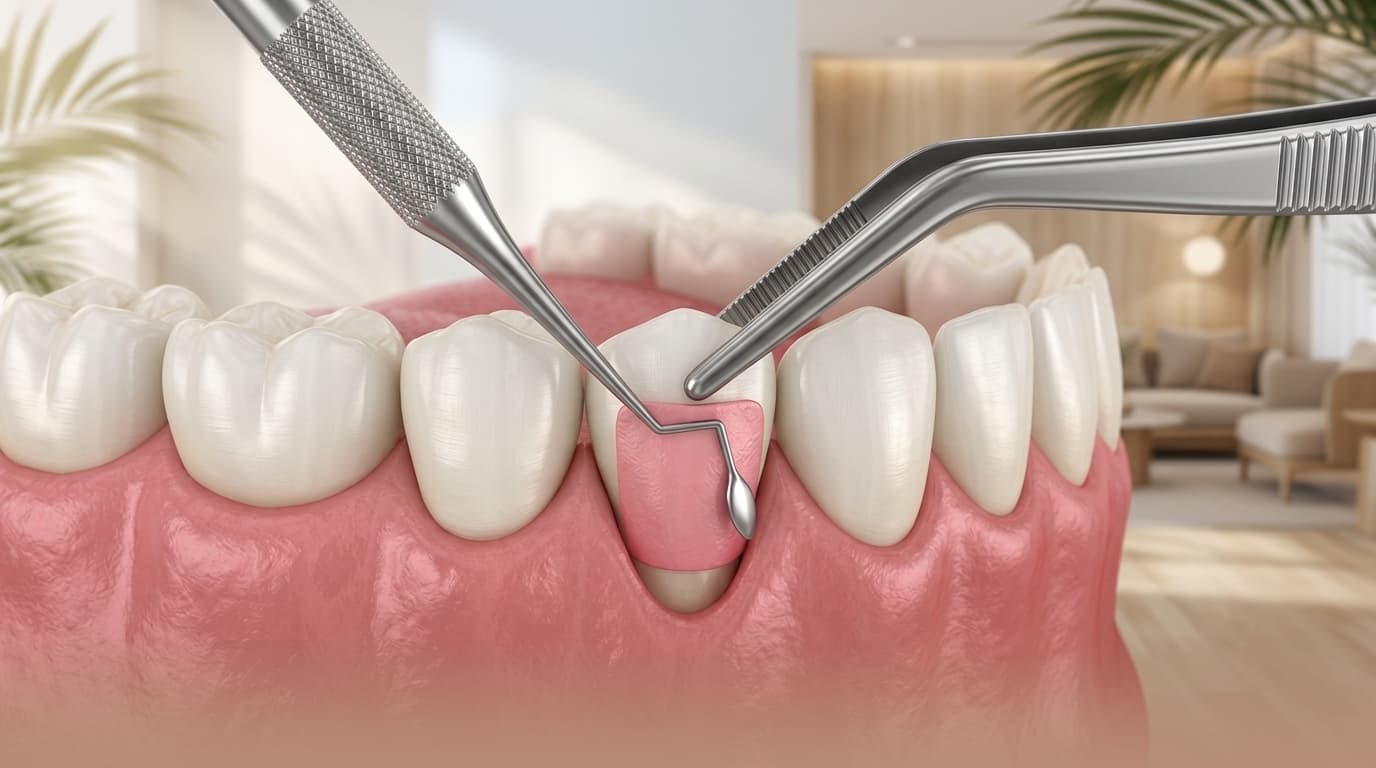
A bone graft adds bone or bone-substitute material to areas of the jaw that don't have enough volume for implants. Over the following months, the body gradually replaces and integrates the graft with your own bone, creating a stable base.

- Tooth loss — without a tooth root, the bone gradually shrinks
- Long-term denture wear — pressure on the gums can speed up bone loss
- Gum disease — infection destroys the bone supporting the teeth
- Infections and extractions — difficult extractions or abscesses can damage bone
- Sinus position — in the upper back jaw, the sinus can limit bone height
Learn why you shouldn't leave gaps for too long in our guide to missing teeth: implants vs bridges.
2. Do You Need a Bone Graft?
You can't tell from the outside. A 3D CBCT scan shows exactly how much bone height and width you have, and where important structures such as nerves and sinuses lie. You may need grafting if:
- Teeth have been missing for a long time
- You've worn dentures for many years
- You've had gum disease or teeth extracted due to infection
- You need implants in the upper back jaw near the sinus
Told You Don't Have Enough Bone?
Send us your X-ray or CBCT scan. Our implant team will review it and explain what may be possible — free of charge.
3. Bone Graft Materials
| Material | Source | Good to Know |
|---|---|---|
| Autograft | Your own bone, often from another area of the jaw | Integrates very well, but requires a second surgical site |
| Allograft | Processed, sterilised human donor bone | No second site needed; carefully screened and processed |
| Xenograft | Processed bone mineral, most often of bovine origin | Widely used; acts as a long-lasting scaffold for new bone |
| Synthetic (alloplast) | Laboratory-made bone substitutes | No human or animal origin |
Materials are often combined, and a protective membrane may be placed over the graft to guide healing. If you have a preference about graft origin — for personal, ethical or religious reasons — tell your dentist so it can be considered in your plan.
4. Types of Bone Graft Procedures
| Procedure | When It's Used |
|---|---|
| Socket preservation | Graft placed straight after an extraction to limit bone shrinkage |
| Ridge augmentation (GBR) | Rebuilds jaw width or height using graft material and a membrane |
| Sinus lift | Adds bone in the upper back jaw beneath the sinus |
| Block graft | A larger piece of bone fixed in place for significant defects |
| Simultaneous graft and implant | Small defects can sometimes be grafted at the same time as implant placement |
Sinus lift
In the upper back jaw, the maxillary sinus sits just above the tooth roots. After tooth loss, the bone here can become very thin. A sinus lift gently raises the sinus membrane and places graft material beneath it, creating enough height for implants. Depending on how much bone is available, implants may be placed at the same time or after healing.
5. The Procedure, Step by Step
Step 1 — 3D scan and planning
A CBCT scan measures your bone and maps nerves and sinuses so the graft and future implants can be planned precisely.
Step 2 — Local anaesthesia
The area is numbed so you shouldn't feel pain. Sedation can be discussed for anxious patients.
Step 3 — Placing the graft
The gum is gently opened, graft material is placed in the deficient area and, where needed, covered with a membrane.
Step 4 — Closing and protecting
The gum is stitched over the graft. Simple grafts often take 30–60 minutes; larger procedures take longer.
Step 5 — Healing and implant placement
After healing is confirmed on a follow-up scan, implants are placed — unless they were placed at the same time.
6. Healing Time: When Can Implants Be Placed?
| Procedure | Typical Healing Before Implants |
|---|---|
| Socket preservation | Around 3–4 months |
| Small ridge augmentation | Often placed with the implant, or 3–6 months |
| Sinus lift | Around 4–9 months if implants aren't placed at the same time |
| Block graft | Around 4–6 months or more |
Healing varies with the size of the graft, the material used, your health and whether you smoke. Your dentist confirms readiness with a follow-up scan.
Get Your Personalised Implant Plan
Share your scans and medical history. We'll explain whether you need grafting, how many trips to plan and send an itemised quote.
7. Recovery and Aftercare
- Expect some swelling and possibly bruising for a few days — cold compresses help in the first 24–48 hours
- Take prescribed medicines exactly as directed
- Eat soft, lukewarm food and chew on the other side
- Avoid smoking and alcohol — they significantly slow healing
- Don't rinse vigorously or touch the area with your tongue in the first days
- Keep the area clean as instructed and attend stitch removal and check-ups
8. Risks and Alternatives to Bone Grafting
Bone grafting is a well-established procedure, but like any surgery it has possible risks, including infection, swelling, graft that doesn't integrate fully and, with sinus lifts, a tear in the sinus membrane. Careful planning, good hygiene and not smoking reduce these risks.
Depending on your anatomy, alternatives may include:
- Angled implants such as All-on-4, which use the strongest available bone — read Joe's story and Daniel's story
- Shorter or narrower implants in selected cases
- Bridges or dentures where implants aren't suitable
9. Bone Grafting in Antalya: Planning Your Trips
When grafting is needed, treatment is usually planned over two trips: one for grafting (and sometimes implants), and one after healing for implants or final teeth. Where suitable, grafting and implants are combined to reduce travel. Your plan, number of visits and costs are confirmed in writing after your scan.
| Treatment | Indicative Price at Our Clinic |
|---|---|
| All-on-4 (per jaw) | £3,000 – £3,400 |
| All-on-6 (per jaw) | £3,400 – £4,000 |
| Bone graft or sinus lift | Depends on size and material — confirmed after your scan |
See our guides to dental treatment in Antalya and implant aftercare.
Implant Transformations at Our Clinic
View All Cases →


Your Implant Team
About Us →
Clinic Owner
Dt. Osman Cengiz
Dentist
Dt. İrem Nur Kılınç
Dentist
Dt. Sevilay Özge Yağcı
Dental Surgeon
Dt. Tuğba Taş Mammadov
Dentist
Dt. Seda Gür
General Manager
Ebru KırcalıoğluA Trusted Choice for UK Patients
Real Implant Journeys
More on YouTube →See how UK patients restored fixed, confident smiles at The Pearl Clinic Antalya.

Hollywood Smile Makeover
From the UK to Antalya
Shaun's 20-Crown Experience
OM3 Hollywood Smile
Natural-Looking Zirconia
Smile Makeover in Turkey
The Ultimate Transformation
Before & After
Real UK Patient Review
Zirconia Smile Makeover
This Smile Has the Force!
Zirconia Teeth in TurkeyHover to preview · Click to watch with sound

Bring Your Scans to a UK Meet-Up
Meet our team in selected UK cities, bring your X-rays and get your bone and implant questions answered before you travel.
Book Your UK Appointment10. Frequently Asked Questions (FAQ)
What is a dental bone graft?
A dental bone graft adds bone or bone-substitute material to areas of the jaw that lack enough volume for implants. Over time it integrates with your own bone to create a stable foundation.
How do I know if I need a bone graft?
A 3D CBCT scan shows exactly how much bone you have. Grafting may be needed if teeth have been missing for a long time, you've worn dentures for years, had gum disease or need implants near the sinus.
Is bone grafting painful?
It's carried out under local anaesthesia, so you shouldn't feel pain during the procedure. Some swelling, bruising and discomfort afterwards is normal and usually settles within days.
What materials are used for bone grafts?
Options include your own bone (autograft), processed donor bone (allograft), processed bone mineral usually of bovine origin (xenograft) and synthetic substitutes. They are often combined with a protective membrane.
Can I choose a graft that isn't of animal origin?
Often, yes. If you have a personal, ethical or religious preference, tell your dentist so suitable materials such as synthetic substitutes can be considered.
How long does a bone graft take to heal?
Healing usually takes around 3–6 months, and sinus lifts can take around 4–9 months if implants aren't placed at the same time. Your dentist confirms readiness with a follow-up scan.
Can bone grafting and implants be done at the same time?
Sometimes. Small defects and some sinus lifts allow implants to be placed at the same time. Larger grafts usually need to heal first.
What is a sinus lift?
A sinus lift raises the sinus membrane in the upper back jaw and places graft material beneath it, creating enough bone height for implants.
How long does the bone graft procedure take?
Simple grafts often take 30–60 minutes. Larger grafts or sinus lifts can take longer.
Can I fly after a bone graft or sinus lift?
Ask your dentist. After a sinus lift in particular, you may be advised to wait before flying and to avoid blowing your nose while the area heals.
Are there alternatives to bone grafting?
Depending on your anatomy, angled implants such as All-on-4, shorter implants, bridges or dentures may be options. Your scan helps decide which is best.
Does smoking affect bone graft success?
Yes. Smoking slows healing and increases the risk of the graft or implants failing. Stopping before and after treatment improves your chances of success.
How many trips will I need for bone grafting and implants?
Many patients need two trips: one for grafting and sometimes implants, and one after healing. Where suitable, procedures are combined to reduce travel.
Not Enough Bone Doesn't Have to Mean No Implants
Send us your X-rays or scans today for a free assessment. We'll explain your options honestly — whether that's grafting, angled implants or another solution.
Start My Free ConsultationThe Pearl Clinic Antalya — Zümrütova Mah., Yalı Cad., M. Ali Ektirir Sitesi No:17/A, 07230 Muratpaşa / Antalya | About Us | Contact Us
info@thepearlclinicantalya.com | +44 20 4652 4100 | Instagram | Facebook | YouTube | TikTok
This article is for general information and does not replace a professional dental examination. Suitability, healing times and costs vary between patients.